Black history and life as seen through Savannah’s newspapers
Vol. I · 1763–1968
Because sometimes the most revealing history isn’t hidden at all. It was printed in the newspaper.
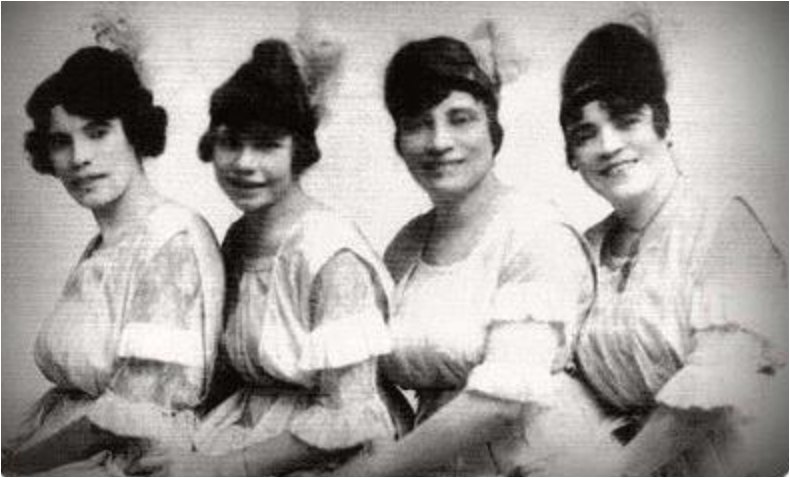
The Whitman Sisters, left to right: Alberta, Alice, Mabel and Essie. Wikipedia.
1899
Social & CulturalMarch 25, 1899 · The Savannah Tribune127 years ago
Cake Walk at the Savannah Theatre: The Whitman Sisters’ After-Lent Show
“The entire balcony and a part of the orchestra will be reserved for their accommodation”
In 1899 the Tribune billed the Whitman Sisters at the Savannah Theatre as the season’s after-Lent society event, with the balcony and part of the orchestra reserved for Black Savannah.
Narration0:00
On March 25, 1899, the Savannah Tribune told its readers what was coming once Lent was over:
“The grand entertainment to be given by the Whitman Sisters in the Savannah Theatre on Monday evening April 3rd, will be the after Lent society event of the season with Savannah’s progressive colored people.”
The paper made a point of the seating:
“The entire balcony and a part of the orchestra will be reserved for their accommodation and this fact will be substantially appreciated.”
The sisters, “supported by select talent,” would be “seen at their best, in all of their latest songs, solos, sketches and up-to-date specialties.”
Then the big draw:
“A grand feature of the occasion will be twenty beautiful and talented children in full dress, in the great prize cake walk.”
Savannah’s “progressive element,” the Tribune said, had “already recognized in the Whitman Sisters favorite representatives of the race in their line,” and “the coming event of April 3rd is eagerly awaited.”
Tickets went on sale at the Savannah Theatre box office on Thursday, March 30. A reserved seat in the orchestra cost 75 cents. The balcony was 50 cents.
The Whitman Sisters were the daughters of the Rev. Albery A. Whitman, a minister and poet, and the family was then based in Atlanta. Their touring company ran until 1943 and became the longest-running and best-paid act on the T.O.B.A., the Black vaudeville theater circuit. The youngest sister, Alice, was billed as the “Queen of Taps.”
Background: Whitman Sisters history (family, Atlanta base, career to 1943, T.O.B.A.).
As printed
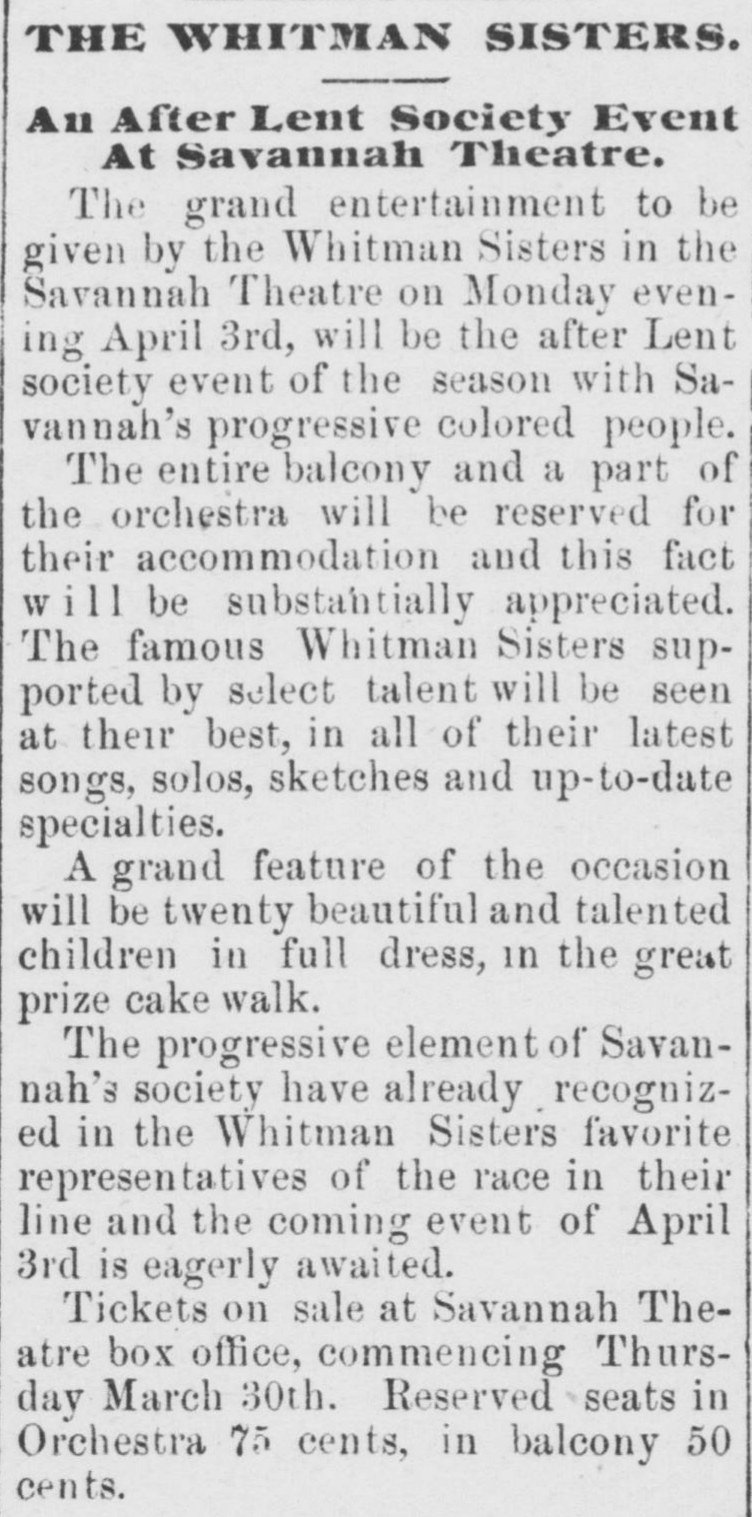
The Savannah Tribune, March 25, 1899.Read the article
THE WHITMAN SISTERS.
An After Lent Society Event At Savannah Theatre.
The grand entertainment to be given by the Whitman Sisters in the Savannah Theatre on Monday evening April 3rd, will be the after Lent society event of the season with Savannah’s progressive colored people.
The entire balcony and a part of the orchestra will be reserved for their accommodation and this fact will be substantially appreciated. The famous Whitman Sisters supported by select talent will be seen at their best, in all of their latest songs, solos, sketches and up-to-date specialties.
A grand feature of the occasion will be twenty beautiful and talented children in full dress, in the great prize cake walk.
The progressive element of Savannah’s society have already recognized in the Whitman Sisters favorite representatives of the race in their line and the coming event of April 3rd is eagerly awaited.
Tickets on sale at Savannah Theatre box office, commencing Thursday March 30th. Reserved seats in Orchestra 75 cents, in balcony 50 cents.
Terms on this page
Lent:
the 40 days before Easter, when many churchgoers gave up parties and entertainment.
Orchestra:
the main floor of seats in a theater, in front of the stage.
Cake walk:
a strutting couples’ dance contest; the best couple won a prize, often a cake.
Specialties:
short novelty acts in a variety show.
T.O.B.A.:
Theatre Owners Booking Association, the circuit that booked Black performers into theaters for Black audiences.
Source
The Savannah Tribune, March 25, 1899, Amusement Column: “The Whitman Sisters. An After Lent Society Event At Savannah Theatre.”