Black history and life as seen through Savannah’s newspapers
Vol. I · 1763–1968
Because sometimes the most revealing history isn’t hidden at all. It was printed in the newspaper.
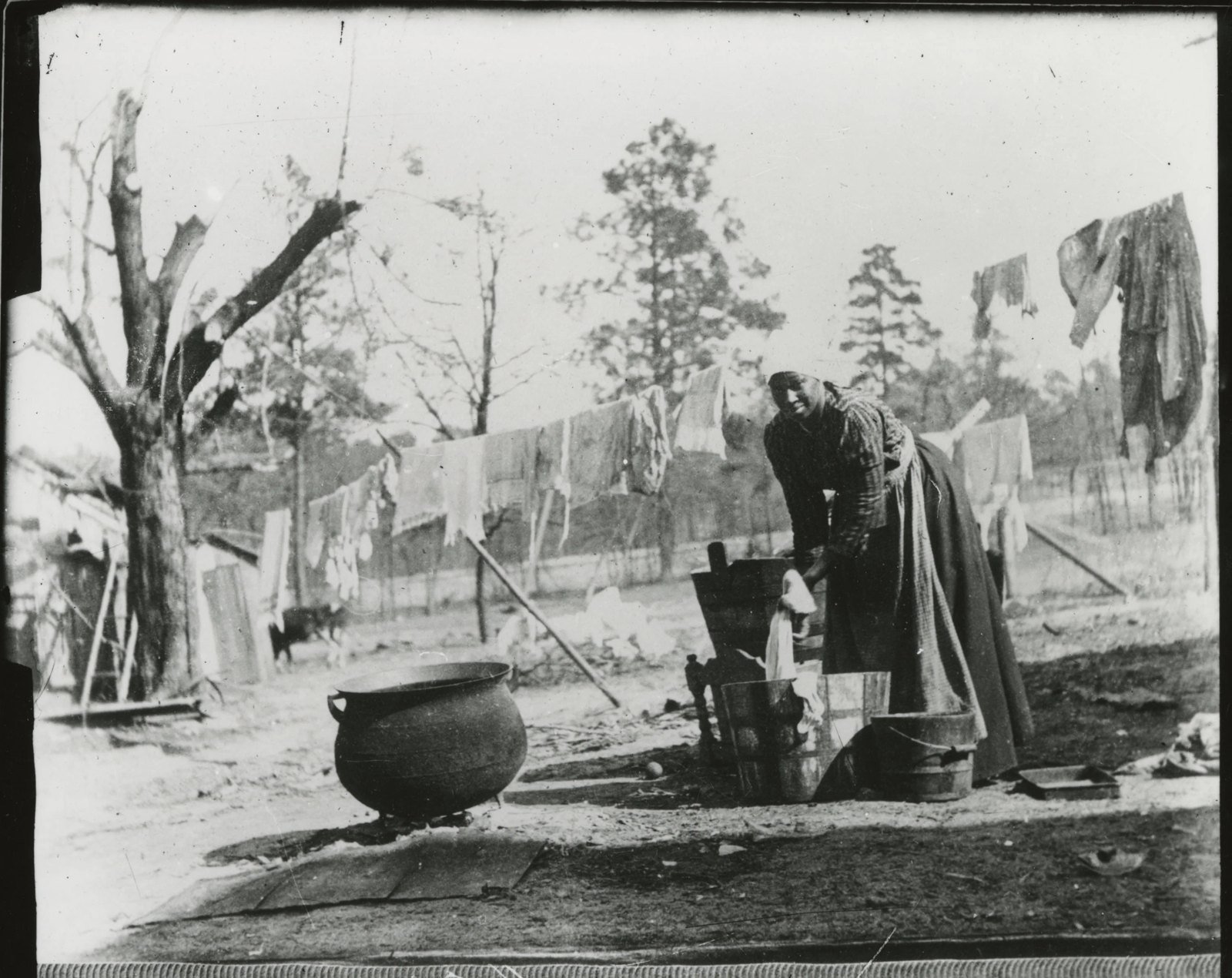
Source: A woman washing clothes. Library of Congress. Not a Savannah scene.
1839
Laws & PoliticsOctober 21, 1839 · Daily Savannah Republican187 years ago
Washerwomen on notice
“Wash clothes at the pump, dry them in the street: whipped, 20 lashes.”
In 1839 Savannah’s City Council banned washing clothes at the public pumps and drying them in the streets. A white offender paid a fine. A Black offender could be whipped.
Narration0:00
On August 2, 1839, Savannah’s City Council passed an ordinance “for defining what shall be considered public nuisances, and for the prevention, punishment and removal of the same.” The Daily Savannah Republican printed it in full on its front page of Monday, October 21.
Section 12 dealt with the city’s public pumps. No one was to wash “any animal, carriage, clothes of any description, or any other thing” there, or do anything that threw “filth or dirt of any kind” on or near them.
Section 13 dealt with the streets. No one was to “wash or dry any articles of clothing or expose the same for the purpose of drying, in the streets, lanes, or squares of the city.”
The punishment depended on who was caught. A white person paid a fine: up to ten dollars at the pumps, up to thirty in the streets.
A “slave or free person of color” “may be whipped not exceeding twenty lashes, unless the owner of such slave or the guardian or friend of such free person of color will pay the fine imposed.”
Half of every fine went to the informer.
The ordinance says “any person.” Washing clothes was among the most common work for enslaved and free Black women in Savannah.
It was signed by the mayor, R. M. Charlton.
As printed
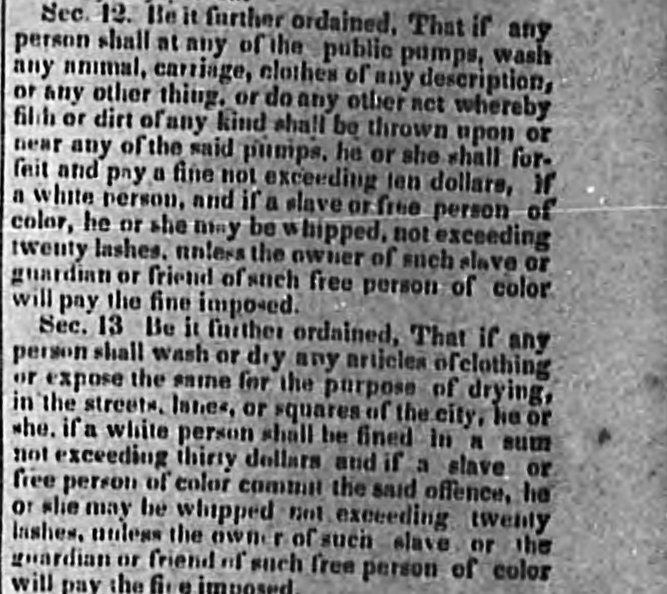
Sections 12 and 13 of the ordinance. Daily Savannah Republican, October 21, 1839, p. 1, column 6. Georgia Historic Newspapers, Digital Library of Georgia.Read the article
AN ORDINANCE For defining what shall be considered public nuisances, and for the prevention, punishment and removal of the same.
[…]
Sec. 12. Be it further ordained, That if any person shall at any of the public pumps, wash any animal, carriage, clothes of any description, or any other thing, or do any other act whereby filth or dirt of any kind shall be thrown upon or near any of the said pumps, he or she shall forfeit and pay a fine not exceeding ten dollars, if a white person, and if a slave or free person of color, he or she may be whipped, not exceeding twenty lashes, unless the owner of such slave or guardian or friend of such free person of color will pay the fine imposed.
Sec. 13. Be it further ordained, That if any person shall wash or dry any articles of clothing or expose the same for the purpose of drying, in the streets, lanes, or squares of the city, he or she, if a white person shall be fined in a sum not exceeding thirty dollars and if a slave or free person of color commit the said offence, he or she may be whipped not exceeding twenty lashes, unless the owner of such slave or the guardian or friend of such free person of color will pay the fine imposed.
[…]
Passed in Council 2d Aug., 1839. R. M. CHARLTON, Mayor.
Terms on this page
Ordinance:
a law passed by a city council.
Public nuisance:
something the law treats as harmful or offensive to the public.
Public pumps:
hand pumps over the city’s wells, in the streets and squares.
Free person of color:
a Black or mixed-race person who was not enslaved.
Guardian:
a white person Georgia law required free people of color to have.
Lashes:
strokes of a whip.
Informer:
a person who reported an offence to the authorities.