Black history and life as seen through Savannah’s newspapers
Vol. I · 1763–1968
Because sometimes the most revealing history isn’t hidden at all. It was printed in the newspaper.
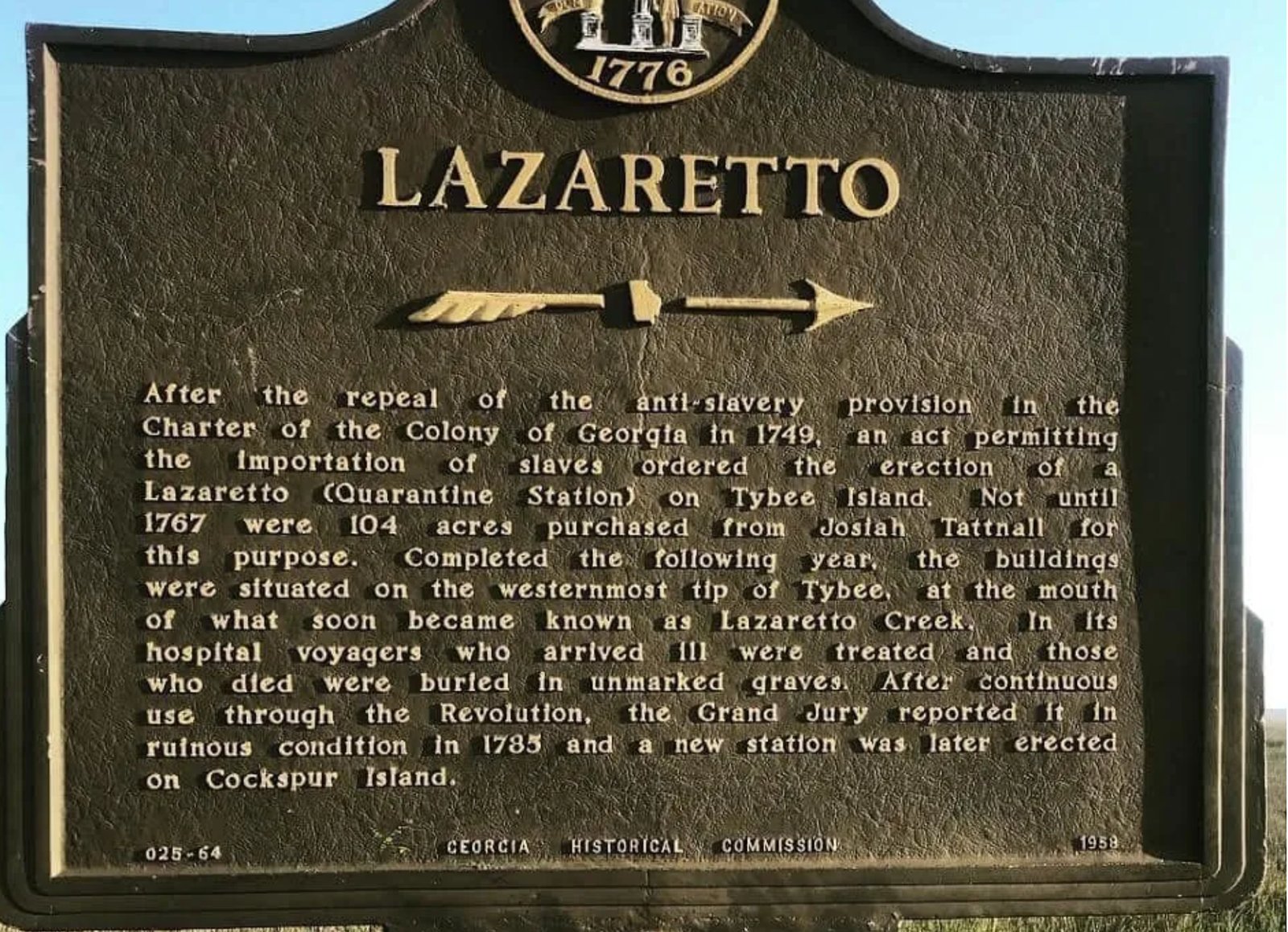
The Georgia Historical Commission marker for the Lazaretto on Tybee Island, erected 1958.
1769
Laws & PoliticsMarch 15, 1769 · The Georgia Gazette257 years ago
Disease Quarantine in “Pest House”: Enslaved Africans Disinfected Upon Arrival
“sick were treated there, and those who died were buried in unmarked graves.”
In 1769 a slave ship arrived at Tybee carrying smallpox. Georgia’s governor ordered everyone aboard confined near the new Lazaretto, the colony’s quarantine “pest house,” until the sickness passed.
Narration0:00
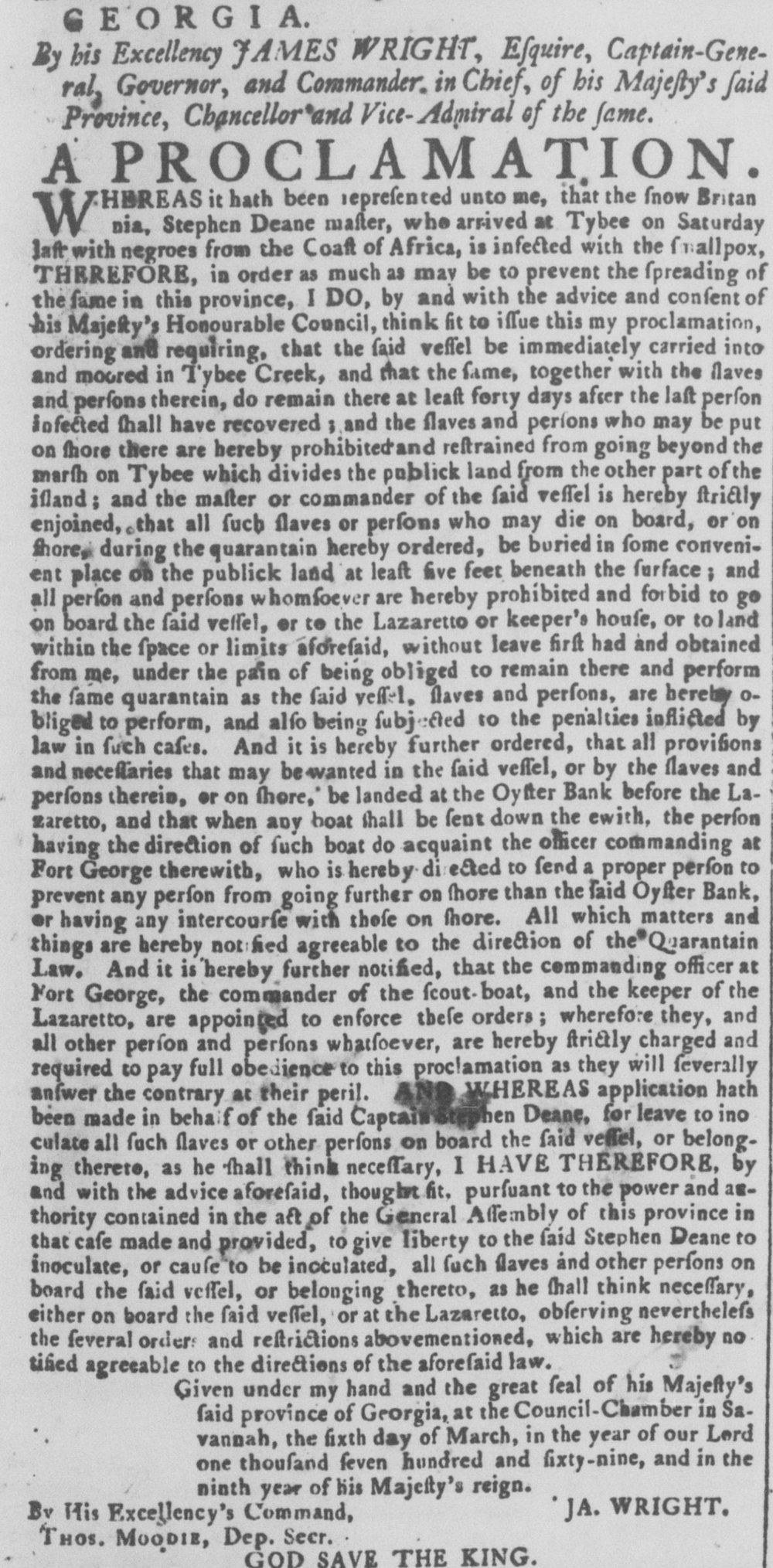
On March 15, 1769, the Georgia Gazette printed a proclamation from Governor James Wright. A ship had come into Tybee with a cargo of captive Africans, and smallpox was aboard:
“Whereas it hath been represented unto me, that the snow Britannia, Stephen Deane master, who arrived at Tybee on Saturday last with negroes from the Coast of Africa, is infected with the smallpox...”
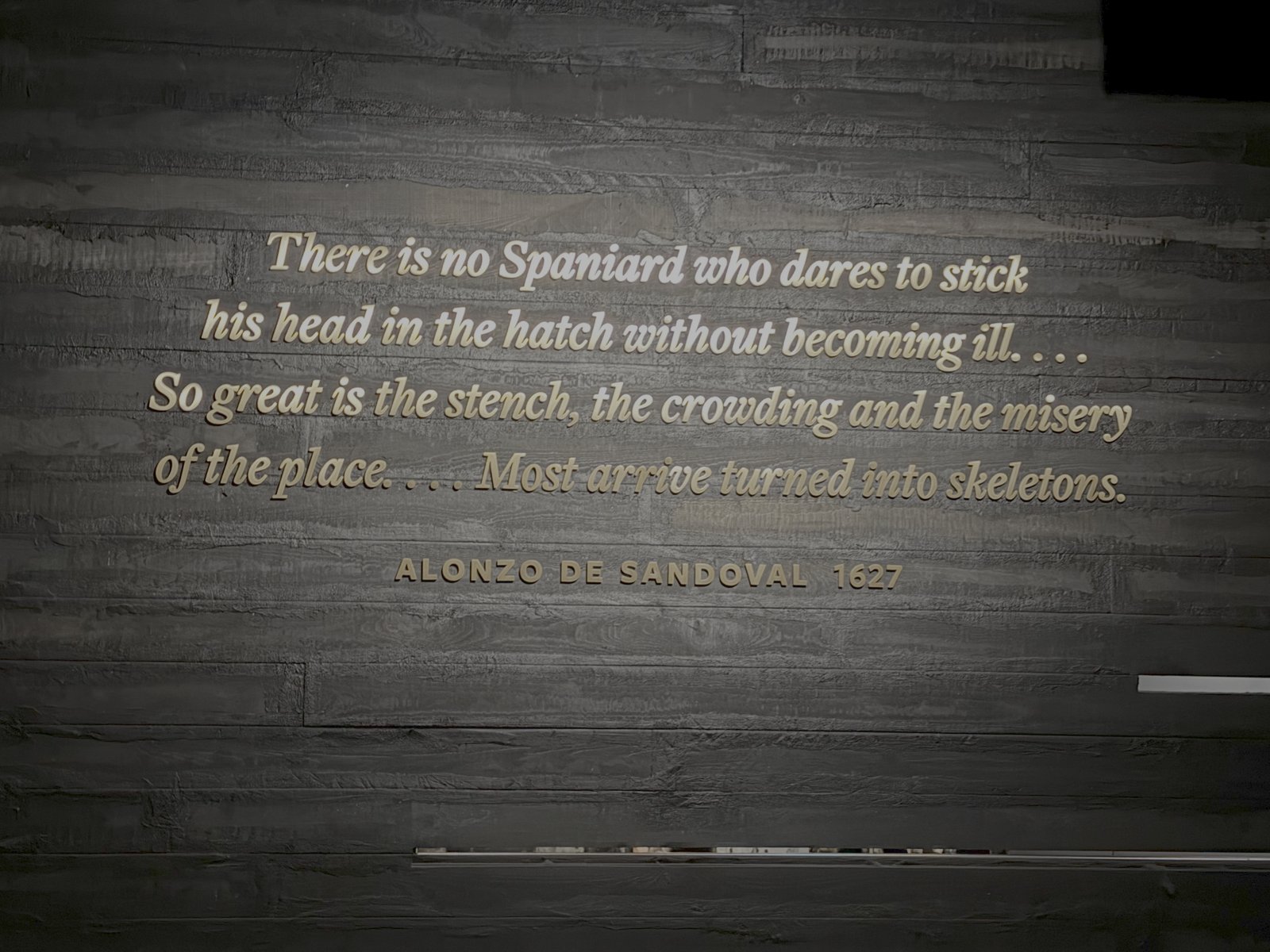
Conditions in the hold of a slave ship had been described long before. In 1627 Alonso de Sandoval, a Jesuit priest who met slave ships arriving at Cartagena, in present-day Colombia, wrote:
“There is no Spaniard who dares to stick his head in the hatch without becoming ill. . . . So great is the stench, the crowding and the misery of the place. . . . Most arrive turned into skeletons.”
Alonso de Sandoval’s 1627 words, as displayed on a museum wall.
The governor ordered the ship moored in Tybee Creek. Everyone on it would stay there “at least forty days after the last person infected shall have recovered.” Those put ashore could go no farther than the marsh that divided the public land from the rest of the island.
He planned for deaths. Any of the “slaves or persons who may die on board, or on shore, during the quarantain” were to be buried on the public land “at least five feet beneath the surface.”
No one else could go near the ship, “or to the Lazaretto or keeper’s house,” without the governor’s leave. Anyone who did would be held for the same quarantine. Food and supplies were to be left at the Oyster Bank in front of the Lazaretto, and a guard from Fort George would make sure no one went past it. The keeper of the Lazaretto was named as one of the men to enforce the orders.
Captain Deane had asked for one more thing, and the governor granted it: leave to inoculate “all such slaves or other persons on board” against smallpox, on the ship or at the Lazaretto.
The Lazaretto was brand new. Georgia had ordered a quarantine station on Tybee after it legalized the slave trade, bought 104 acres for it from Josiah Tattnall in 1767, and finished the buildings in 1768. The sick were treated there, and those who died were buried in unmarked graves. The creek beside it is still called Lazaretto Creek.
Background: Georgia Historical Commission marker 025-64, “Lazaretto” (1958); Alonso de Sandoval, De instauranda Aethiopum salute (1627).
As printed
The Georgia Gazette (Savannah), March 15, 1769, page 3.Read the article
GEORGIA.
By his Excellency JAMES WRIGHT, Esquire, Captain-General, Governor, and Commander in Chief, of his Majesty’s said Province, Chancellor and Vice-Admiral of the same.
A PROCLAMATION.
WHEREAS it hath been represented unto me, that the snow Britannia, Stephen Deane master, who arrived at Tybee on Saturday last with negroes from the Coast of Africa, is infected with the smallpox, THEREFORE, in order as much as may be to prevent the spreading of the same in this province, I DO, by and with the advice and consent of his Majesty’s Honourable Council, think fit to issue this my proclamation, ordering and requiring, that the said vessel be immediately carried into and moored in Tybee Creek, and that the same, together with the slaves and persons therein, do remain there at least forty days after the last person infected shall have recovered; and the slaves and persons who may be put on shore there are hereby prohibited and restrained from going beyond the marsh on Tybee which divides the publick land from the other part of the island; and the master or commander of the said vessel is hereby strictly enjoined, that all such slaves or persons who may die on board, or on shore, during the quarantain hereby ordered, be buried in some convenient place on the publick land at least five feet beneath the surface; and all person and persons whomsoever are hereby prohibited and forbid to go on board the said vessel, or to the Lazaretto or keeper’s house, or to land within the space or limits aforesaid, without leave first had and obtained from me, under the pain of being obliged to remain there and perform the same quarantain as the said vessel, slaves and persons, are hereby obliged to perform, and also being subjected to the penalties inflicted by law in such cases. And it is hereby further ordered, that all provisions and necessaries that may be wanted in the said vessel, or by the slaves and persons therein, or on shore, be landed at the Oyster Bank before the Lazaretto, and that when any boat shall be sent down the ewith, the person having the direction of such boat do acquaint the officer commanding at Fort George therewith, who is hereby directed to send a proper person to prevent any person from going further on shore than the said Oyster Bank, or having any intercourse with those on shore. All which matters and things are hereby notified agreeable to the direction of the Quarantain Law. And it is hereby further notified, that the commanding officer at Fort George, the commander of the scout-boat, and the keeper of the Lazaretto, are appointed to enforce these orders; wherefore they, and all other person and persons whatsoever, are hereby strictly charged and required to pay full obedience to this proclamation as they will severally answer the contrary at their peril. [unclear] WHEREAS application hath been made in behalf of the said Captain [unclear] Deane, for leave to inoculate all such slaves or other persons on board the said vessel, or belonging thereto, as he shall think necessary, I HAVE THEREFORE, by and with the advice aforesaid, thought fit, pursuant to the power and authority contained in the act of the General Assembly of this province in that case made and provided, to give liberty to the said Stephen Deane to inoculate, or cause to be inoculated, all such slaves and other persons on board the said vessel, or belonging thereto, as he shall think necessary, either on board the said vessel, or at the Lazaretto, observing nevertheless the several orders and restrictions abovementioned, which are hereby notified agreeable to the directions of the aforesaid law.
Given under my hand and the great seal of his Majesty’s said province of Georgia, at the Council-Chamber in Savannah, the sixth day of March, in the year of our Lord one thousand seven hundred and sixty-nine, and in the ninth year of his Majesty’s reign.
By His Excellency’s Command, JA. WRIGHT. THOS. MOODIE, Dep. Secr.
GOD SAVE THE KING.
Terms on this page
Lazaretto:
a quarantine station for ships’ passengers and crews, often called a “pest house.”
Snow:
a two-masted sailing ship.
Inoculate:
to deliberately infect someone with a mild case of smallpox so they would become immune.
Quarantain:
the paper’s spelling of quarantine.
Source
The Georgia Gazette, March 15, 1769, page 3 (Georgia Historic Newspapers, image 3; reel 19986215, seq. 383): Proclamation of Governor James Wright, dated March 6, 1769, on the snow Britannia.